Author: Craig Norris

  • How audiences shape media (Episode 159)

    How audiences shape media (Episode 159)

    What do Baldur’s Gate players, Christopher Nolan and AI scammers all have in common? They all reveal something surprising about how people interact with technology.

    Segment 1: What Players Actually Do

    The biggest Baldur’s Gate 3 save scummers slammed quicksave over 1,400 times in one go, Larian says: “You doing okay there?”

    • Why do people save-scum?
    • Is save-scumming “cheating”?
    • Games as experimentation rather than competition.

    New Baldur’s Gate 3 Player Stats Prove You’re All Knife-Happy Bard Murderers

    • Players claim to roleplay…
    • …but statistics show many optimise outcomes
    • .The gap between player identity and player behaviour.

    Guillermo Del Toro Wants Extra Checkpoints In Games For ‘Elderly Players’ After Getting His Ass Kicked By Dead Cells

    • Accessibility vs difficulty
    • Checkpoints aren’t “easy mode.”
    • Older gamers
    • Less available gaming time
    • Respecting players’ time

    Segment 2: The Odyssey Effect

    Well, the Greek Prime Minister Seems Happy With The Odyssey — He Called Christopher Nolan to Thank Him for ‘Stimulating Global Interest in Ancient Greek Culture’

    Assassin Creed player counts spike in the wake of Christopher Nolan’s The Odyssey

    ‘The Odyssey’ Is So Big, It’s Made People Like ‘Assassin’s Creed’ Again

    • Games becoming educational gateways.
    • Tourism.
    • Classical history becoming mainstream.
    • Assassin’s Creed Discovery Tour.
    • Pop culture driving historical curiosity

    Segment 3: Who Controls Trust?

    AI scammers outperform humans when it comes to building trust

    • AI isn’t necessarily “smarter.”
    • It’s infinitely patient.
    • Personalised.
    • Never tired.
    • Emotionally adaptive.

    Multiple Major ASMR Accounts Suddenly Removed From YouTube Over ‘Explicit Content’

    • Automated moderation
    • False positives
    • Creator livelihoods
    • Platform transparency
    • AI making decisions for humans
    • We’re increasingly interacting with algorithms instead of people.
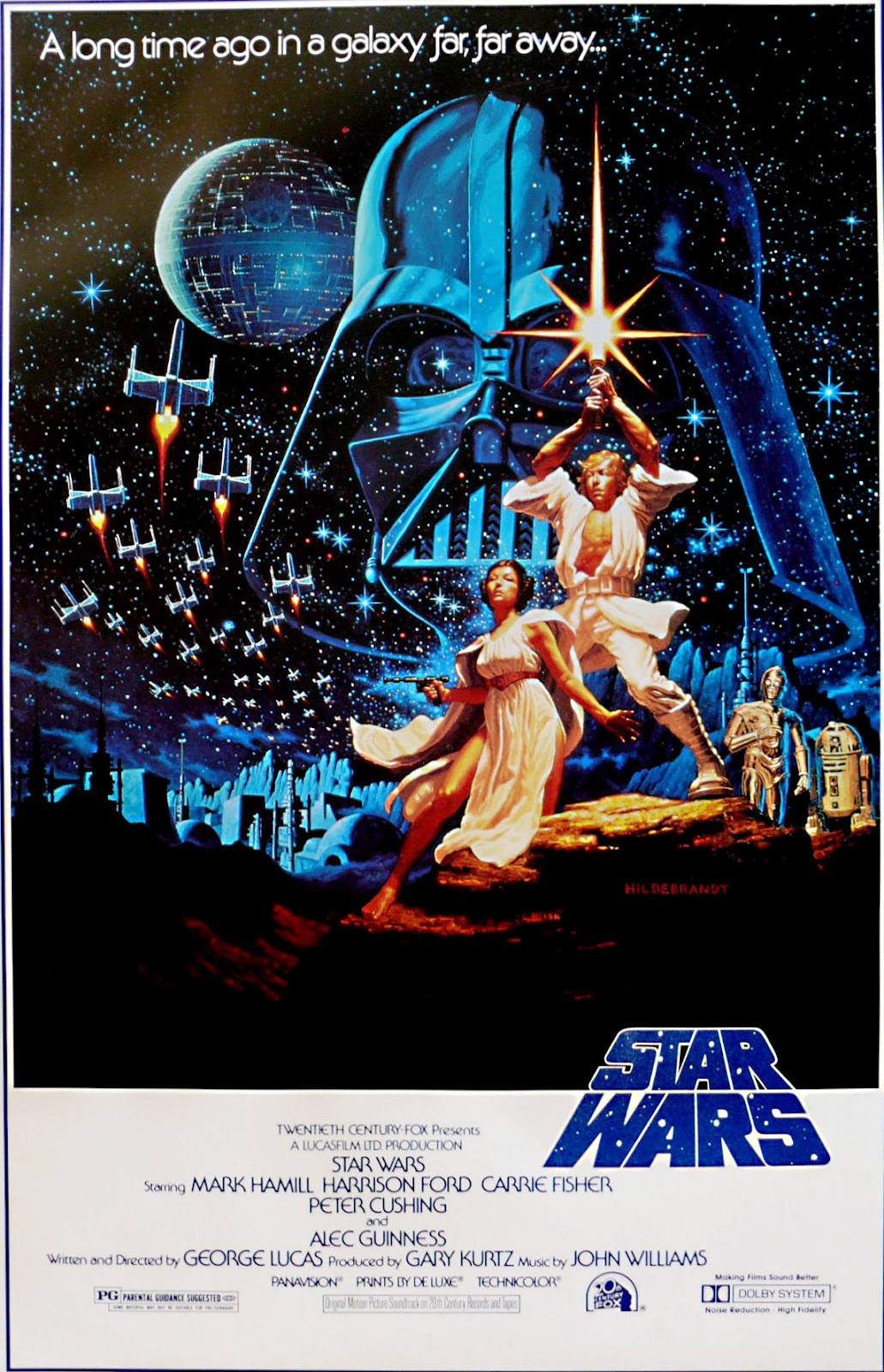
  • Star Wars: A New Hope Commentary with George Lucas, Carrie Fisher, Ben Burtt and more

    Star Wars: A New Hope Commentary with George Lucas, Carrie Fisher, Ben Burtt and more

    Star Wars: Built by Constraints, Not Algorithms

    Star Wars: A New Hope Commentary with George Lucas, Carrie Fisher, Ben Burtt and more

    George Lucas discusses how studios didn’t understand the film and forced the budget to be under $10 million. He keeps returning to the idea that the constraints produced better creative decisions. The limited budget, practical effects, unusual storytelling choices, and refusing to over-explain the world.

    This central idea of Lucas’ provides an interesting link to the four news stories discussed in this episode, each deals with the tension between creative intent, technology and corporate control.

    Quote 1 — “Episode IV wasn’t allowed”

    0:45–1:15

    George Lucas explains that Fox refused to let him call the film Episode IV because audiences would be confused. Only after it became successful could he restore his original vision.

    Questions:

    • Who controls a creative work?
    • The studio?
    • The creator?
    • The audience?

    Quote 2 — The original trilogy began as one enormous story

    2:20–3:55

    Lucas explains he wrote a 200-page screenplay, realised it was impossible to film, and instead turned only the first act into a movie while planning the rest for later.

    Quote 3 — The “used universe”

    4:00–5:00

    Ben Burtt explains Lucas wanted everything to sound real—rusty doors, worn-out engines, machines that backfired. He wanted a “used universe.”

    Questions:

    • Why do practical imperfections make worlds believable?
    • Is digital entertainment becoming too clean?
    • Why do audiences still love tactile worlds?

    Quote 4 — Following the least important characters

    7:30–9:15

    Lucas explains everyone told him following the droids was a terrible idea.

    He ignored them.

    He kept the structure anyway.

    Question:

    Would today’s major publisher approve something that unconventional?

    Quote 5 — Don’t explain everything

    9:20–10:05

    Lucas discusses Kurosawa and says he hates films that stop to explain how everything works.

    The audience should simply enter the world.

    Today we have

    • endless lore videos
    • companion apps
    • wiki pages
    • cinematic universe explainers

    Lucas wanted mystery.

    Quote 6 — Everything nearly went wrong

    10:20–12:10

    The Tunisia shoot

    • robots didn’t work
    • weather destroyed sets
    • schedule problems
    • Lucas feared the movie was failing

    Quote 7 — R2-D2’s voice

    12:30–15:20

    This is fantastic radio.

    Ben Burtt explains

    • recording babies
    • using his own voice
    • re-recording sounds in bathrooms and hallways
    • “worldizing” audio

    Quote 8 — Fast storytelling

    20:20–21:30

    Lucas explains audiences originally thought Star Wars moved incredibly fast because he deliberately refused to explain everything.

    Quote 9 — Practical effects

    28:00–29:00

    Lucas explains the Bantha was literally an elephant in costume because digital effects didn’t exist.

    • Why do audiences still respond to practical effects?
    • Why are films like Dune and The Odyssey emphasising physical production?

    Quote 10 — Science fiction before Star Wars

    39:10–40:00

    Lucas discusses how studios didn’t understand the film and forced the budget under $10 million.

  • The Pushback Against Digital Control (Episode 158)

    The Pushback Against Digital Control (Episode 158)

    From Hollywood’s renewed embrace of the theatrical experience to the ongoing battles over intellectual property, digital ownership, and physical media, we explore how creators, corporations, and audiences are shaping the next era of film and gaming.

    Watch Here:

    Listen Here:

    1. Hollywood rejects digital-first thinking.

    Avengers, Dune, Odyssey and the Rejection of Digital in a Streaming World From https://www.denofgeek.com/movies/avengers-dune-odyssey-rejection-digital-streaming-world/

    • Avengers, Dune, Odyssey…
    • Why Filmmakers are returning to theatrical spectacle.
    • The value of shared cultural experiences.
    • Streaming fatigue.
    • Is cinema becoming an event again?

    2. Nintendo tries to control creativity

    “You saved the entire industry”: The 13-year-old video of a Pokemon fan game now cited in the rejection of a Nintendo patent is being celebrated by fans happy to see creative freedom win. https://www.gamesradar.com/games/pokemon/you-saved-the-entire-industry-the-13-year-old-video-of-a-pokemon-fan-game-now-cited-in-the-rejection-of-a-nintendo-patent-is-being-celebrated-by-fans-happy-to-see-creative-freedom-win/

    The Japanese Patent Office has officially had enough of Nintendo, rejecting a patent attached to the Palworld lawsuit with “rarely seen” sass https://www.gamesradar.com/games/pokemon/the-japanese-patent-office-has-officially-had-enough-of-nintendo-rejecting-a-patent-attached-to-the-palworld-lawsuit-with-rarely-seen-sass/

    • Fan game patent story.
    • Palworld patent rejection.
    • Where should intellectual property protection end?
    • Do patents encourage innovation or suppress it?

    3. Sony moves away from ownership

    The Global Second-Hand Video Game Market Is Valued at $7.2 Billion, but Sony’s Decision to Kill PlayStation Discs Threatens to Destroy It, Analysts Say https://www.ign.com/articles/the-global-second-hand-video-game-market-is-valued-at-72-billion-but-sonys-decision-to-kill-playstation-discs-threatens-to-destroy-it-analysts-say

    • Death of physical discs.
    • Second-hand market.
    • Digital purchases vs actually owning media.
    • Preservation, resale rights and consumer rights.
  • Ep. 157 Who controls culture when media becomes algorithmic, digital, and artificial?

    Ep. 157 Who controls culture when media becomes algorithmic, digital, and artificial?

    Episode 157. AI is changing how we create, discover and preserve culture. We explore AI companions, synthetic media, digital ownership, game preservation, and why physical media is making a comeback.

    This episode was recorded live at Edge Radio 99.3FM studios in Hobart Tasmania, and first aired on 23 July 2026.

    Watch Here:

    Listen Here:

    Segment 1. AI Is Changing Human Behaviour

    AI isn’t just replacing work. It’s replacing relationships, identity and trust.

    China moving to restrict emotional attachment to AI companions

    • Are governments acknowledging AI companionship as psychologically significant?
    • Are AI companies designing for attachment?

    Researchers accidentally discover an extremely unusual ChatGPT user

    70% of Japanese companies don’t disclose AI-generated creative work

    • Should disclosure be mandatory?
    • Does it matter if audiences can’t tell?
    • Is hidden AI fundamentally deceptive?

    LinkedIn filled with AI-generated posts

    Segment 2 – Can We Still Tell What’s Real?

    Scientists developing AI image detection

    People can learn to detect AI faces

    • Are we entering an endless arms race?
    • Should people be trained?
    • Or should AI content simply be labelled?

    Segment 3 – Why Physical Media Suddenly Matters Again

    People buying CDs again

    Hidden content on original game discs

    Video Game History Foundation warning about preservation

    Kojima on digital ownership

    Former PlayStation boss discussing why PS2 success can’t be repeated

    Segment 4 – Stories Still Matter (10 min)

    Absolute Batman succeeding on TikTok

    • How does Gen Z discover stories?

    Josh Sawyer on morally grey RPGs

  • Episode 156. Who creates meaning? Humans, AI, audiences, or accidents?

    Episode 156. Who creates meaning? Humans, AI, audiences, or accidents?

    This week we’re looking at who actually creates culture. Is it authors? Fans? AI? Governments? Or sometimes complete accidents? Whether it’s Star Wars fan fiction becoming a Hollywood film, governments subsidising AI translation, or gamers discovering their favourite Batman moment was actually a bug, today’s stories all circle around one question: where does meaning actually come from?

    Watch/Lister here

    Segment 1: Fans become creators

    Star Wars’ controversial Reylo ship will soon be a Prime Video rom-com

    From <https://www.polygon.com/the-love-hypothesis-reylo-prime-video-september/>

    • Reylo fanfiction
    • The Love Hypothesis origins
    • Fanfiction entering mainstream publishing
    • Studios now mining fandom for ideas

    Brandon Sanderson says fantasy’s future depends on not copying Lord of the Rings

    From https://www.polygon.com/brandon-sanderson-says-fantasy-future-not-copying-lord-of-the-rings/

    • Tolkien became a template
    • Then everyone copied Tolkien
    • Now fantasy succeeds by finding new voice

    Segment 2 — AI doesn’t understand media

    Study Uses Age Of Empires Scenario Editor To Illustrate Why It’s Farcical To Treat AI As Cognizant

    From https://kotaku.com/study-uses-age-of-empires-scenario-editor-to-illustrate-why-its-farcical-to-treat-ai-as-cognizant-2000711251

    IF LLMS HAVE HUMAN-LIKE ATTRIBUTES, THEN SO
    DOES Age of Empires II

    https://arxiv.org/pdf/2605.31514

    ELIZA effect

    From https://en.wikipedia.org/wiki/ELIZA_effect

    • anthropomorphism
    • projection
    • conversational interfaces

    AI Crashing Out While Dubbing A Fake WWE News Channel May Genuinely Be The Funniest Thing I’ve Seen In 2026

    From https://kotaku.com/ai-crashing-out-while-dubbing-a-fake-wwe-news-channel-may-genuinely-be-the-funniest-thing-ive-seen-in-2026-2000699013

    Japanese Govt. to Consider Providing Subsidies for AI Translation, Overseas Sales Generation to Companies Like Shueisha, Crunchyroll

    From https://www.animenewsnetwork.com/news/2026-06-29/japanese-govt-to-consider-providing-subsidies-for-ai-translation-overseas-sales-generation-to-/.239030

    • speed vs localisation
    • translation as cultural adaptation
    • anime localisation debates
    • preserving nuance
    • economic pressure on translators

    Segment 3: Audiences create meaning

    “Half the game is in the player’s imagination”: Batman Arkham Knight fan-favorite detail is actually a 12-year-old bug, Rocksteady veteran reveals

    From https://www.gamesradar.com/games/action/half-the-game-is-in-the-players-imagination-batman-arkham-knight-fan-favorite-detail-is-actually-a-12-year-old-bug-rocksteady-veteran-reveals/

    Segment 4: Weird internet

    The Global Internet Is Being Attacked by Sharks, Google Confirms

    From https://slate.com/technology/2014/08/shark-attacks-threaten-google-s-undersea-internet-cables-video.html

    Scientists find antidepressant in the brains of sharks off the coast of Rio de Janeiro

    From https://theconversation.com/scientists-find-antidepressant-in-the-brains-of-sharks-off-the-coast-of-rio-de-janeiro-285928

    Quick final story

    The Walking Dead’s Robert Kirkman admits Game of Thrones creator George R.R. Martin is “way better at killing characters than me”

    From https://www.gamesradar.com/entertainment/horror-shows/the-walking-deads-robert-kirkman-admits-game-of-thrones-creator-george-r-r-martin-is-way-better-at-killing-characters-than-me/

  • Ep 155. How digital culture is reshaping reality, authority, and meaning.

    Ep 155. How digital culture is reshaping reality, authority, and meaning.

    Listen/watch live Thurs 4pm AEST

    Edge Radio: https://www.edgeradio.org.au/shows/media-mothership/
    Live YouTube stream: https://www.youtube.com/@mediamothership993/streams

    Digital spaces are no longer separate from society. Games, fandoms, memes, wikis, and AI systems have become places where governments govern, citizens socialise, stories are told, and institutions make decisions.
    Watch/Listen here

    Minecraft as a Storytelling Tool

    How did a sandbox become a storytelling medium? Are games becoming the new film, television, and literature?

    UK Government Employees Playing GTA Online

    If millions spend time there, does it become a public square? Are online worlds now part of “real life”?

    White House Anime Propaganda

    What happens when fandom aesthetics become political tools? Does borrowing anime imagery increase soft power or damage it?

    Wikipedia Philosophy Game

    Does the internet naturally create connections? Is this an accidental metaphor for culture itself?

    Lawyers Using Hallucinating AI

    What happens when expertise is outsourced? Why are professionals trusting systems they don’t understand?

  • Media Review: Technology changing culture and communication

    Media Review: Technology changing culture and communication

    Episode 154.

    Welcome to this week’s collection of articles, links and talking points for Media Mothership.

    The show airs live on Thursday 4 June from 4:00pm to 5:00pm. The topics listed below are intended as discussion starters, and the conversation may develop in unexpected directions during the broadcast.

    Feel free to join the live chat on YouTube or Twitch or sms in direct to the Edge Radio station 0488 811 707

    Topic: What happens when human creativity, communication, and culture become increasingly mediated by large technological systems and corporations?

    Watch & Listen here:

    The Dead Internet Is Here: Bot Traffic Tops Human Traffic for First Time

    • If much of the internet is machine-generated, what happens to online culture?
    • Is “Dead Internet Theory” becoming less conspiracy and more observation?

    Predictive Text in “Demonstrable Decline” After AI Introduction

    • Are AI tools making us better communicators or worse?
    • Has autocomplete become less useful because it tries to be too clever?
    • What happens when language tools optimize for prediction rather than clarity?

    The Pope’s AI Warning Could Help Workers Seek Religious Exemptions

    • Do workers have a right not to use generative AI?

    Leave The Lord of the Rings Alone Already

    • Why do corporations keep returning to established franchises?
    • What happens when stories become brands?

    Citizen Sleeper Creator’s New “Fungalpunk” RPG

    “Playing as a parasite”

    Steven Spielberg Writing on an iPad Notes App

    • Great art often starts with simple tools.
    • Professionals using ‘ordinary’ consumer technology.

    Diablo 4 Statistics Story

    • What do class preferences reveal about player fantasy?
    • Why are “dark mage” archetypes often more popular than holy warriors?

    Euro Truck Simulator Project

    We’ve been talking about how technology shapes culture and identity online. So what happens when people deliberately enter simulated spaces to build identities, communities, and even professional aspirations? That brings us to Euro Truck Simulator.

    I’ve been thinking about doing a music show where I play Euro Truck Simulator while presenting radio. At first glance that sounds ridiculous. Why would anyone want to pretend to be a truck driver while also pretending to be a radio host?

    ExampleIdentity Being Performed
    War photographer in The Last of UsJournalist / conflict photographer
    DayZ war photographerEmbedded correspondent
    Liberty City tourismTourist / travel writer
    GTA travel photographyTourist photographer
    Wedding photographer in UnchartedProfessional photographer
    Euro Truck Simulator radio hostTrucker / radio DJ
    Media tourism researchPilgrim / tourist / fan explorer
  • The Backrooms (2026): The Horror of Becoming Your Own Monster

    The Backrooms (2026): The Horror of Becoming Your Own Monster

    At first glance, Backrooms (2026) looks like a horror film about an impossible maze populated by distorted creatures and misremembered spaces. Drawing on concepts from mindfulness-based psychology and cognitive behavioural theory, Backrooms can be read as a film about conditioning, identity, avoidance, and suffering.

    The deepest source of horror in Backrooms isn’t the liminal maze.

    It’s the possibility of becoming trapped inside your own conditioned patterns of thinking, feeling, and reacting.

    Clark’s tragedy is that he became trapped in identity itself.

    Clark’s Loop

    Throughout the film, Clark appears consumed by loss. He is no longer the architect he dreamed of becoming. His marriage has failed. He runs a struggling pirate-themed furniture store that seems to embody everything he never wanted his life to become.

    Clark’s attempt to escape identity completely leads him deeper into identification with Pirate Clark.

    His response to these losses is not acceptance but avoidance.

    He drinks heavily. He obsesses over the Backrooms. During the roleplay exercises with Mary, he seems unable to fully confront his own responsibility for what happened. He repeatedly retells and reframes the story of his life. The more painful the reality becomes, the more he retreats into explanations, rationalisations, and self-protective narratives.

    Clark revisits the memory of his failed marriage, attempting to reshape its meaning.

    The film’s key insight may be expressed through Mary’s observation:

    “We all have our loops. Our habits. Behaviors that keep us walking in circles.”

    Clark’s tragedy is not simply that bad things happened to him. His tragedy is that he becomes trapped in a loop that once protected him but now sustains his suffering.

    The Backrooms as Conditioned Identity

    A fascinating aspect of the film is the idea that the Backrooms are populated by “misremembered” versions of people, objects, and places.

    Furniture is distorted.

    Rooms are distorted.

    People are distorted.

    Memories are distorted.

    What if the Backrooms are not merely a place, but a representation of conditioned identity itself?

    The rooms are not merely memories.

    The corridors, loops, dead ends, and repeating pathways resemble the mental routes we travel through habit. The more often we walk them, the easier they become to follow. Eventually, they feel natural and inevitable.

    The maze-like architecture can be read as a metaphor for conditioned mental pathways and recurring habits.

    Clark repeatedly follows the path of least resistance.

    Avoidance.

    Alcohol.

    Blame.

    Rumination.

    Resentment.

    The terrifying possibility suggested by the film is that these pathways do not lead out of suffering. They become the maze.

    Pirate Clark

    The film’s most disturbing image is not the shadowy creature lurking in the corners of the Backrooms.

    It is Pirate Clark.

    Initially, I thought Pirate Clark represented Clark’s “inner demon.” On reflection, I think something more interesting is happening.

    Pirate Clark is not Clark’s hidden self.

    Pirate Clark is Clark’s most developed self.

    Pirate Clark may represent not Clark’s hidden self, but the culmination of years of reinforced avoidance and self-identification.

    He is the accumulated result of years of reinforcement, avoidance, anger, shame, and self-identification. The pirate costume begins as an embarrassing performance for furniture advertisements. By the end of the film, the performance has become reality.

    Clark spends much of the film trying to escape the identity he hates. Ironically, his hatred, avoidance, and fixation only strengthen it.

    He becomes the monster he fears.

    Why Mary Survives

    The more I reflected on the film, the more I began to think that Mary, not Clark, is the true protagonist.

    Like Clark, Mary experiences loss. Her childhood home is demolished. Her relationship with her mother is marked by absence and suffering. Her present life appears lonely and uncertain.

    If Clark represents disequilibrium and identification with conditioned patterns, what specifically does Mary’s experience entering the backrooms show?

    Yet her response is different.

    She preserves a concrete handprint from her childhood, but eventually uses it to escape the Backrooms, destroying it in the process. She remembers the past, but she does not appear consumed by it.

    Mary preserves a fragment of her past, yet ultimately destroys it in order to escape.

    Unlike Clark, she does not spend the film trying to force certainty onto reality.

    She experiences fear.

    She experiences confusion.

    She experiences loss.

    But she increasingly appears able to remain with those experiences without reacting to them immediately.

    The ending is particularly striking. Mary does not receive answers. The mysteries of the Backrooms remain unresolved. The final images reveal that even Mary’s memories and identity have become incorporated into the strange logic of the Backrooms.

    Yet she does not appear trapped in the same way Clark was.

    The Horror of Impermanence

    The film ultimately left me thinking about impermanence.

    Clark cannot accept change. He cannot accept the loss of his marriage, his career dreams, or his self-image. He wants freedom from suffering so badly that he seeks freedom from experience itself.

    He envies the furniture because it does not think, feel, regret, or suffer. As he says, “For starters, they can’t feel anything. Can you imagine how good that must feel? I mean, there’s no thoughts, no pain, no ego. No fear. They simply… exist. Like furniture.”

    Mary’s journey points in a different direction.

    Not certainty.

    Not victory.

    Not closure.

    Acceptance.

    If Clark’s central craving is certainty about himself (“I need to know who I am”), could Mary’s ending represent a willingness to remain in not-knowing?

    The film’s final lesson may be that suffering does not come from uncertainty itself. Suffering comes from our desperate attempts to escape uncertainty, fix our identities, and hold onto things that cannot remain unchanged.

    Clark becomes trapped by the story he tells about himself.

    Mary survives because she remains willing to live without a final comforting story. Mary’s final emotion is not terror (“it’s still coming!”), relief (“I escaped!”), or triumph (“I defeated it!”). It is the absence of these conventional horror endings that is interesting. Mary seems to accept the uncertainty of not knowing.

    And that may be the most unsettling idea in the entire film.

    Unlike Pirate Clark, the Backrooms’ version of Mary remains unresolved, preserving uncertainty rather than becoming a fixed identity.
  • Ep 153 Backrooms, Ghibli and AI Chaos

    Ep 153 Backrooms, Ghibli and AI Chaos

    Welcome to this week’s collection of articles, links and talking points for Media Mothership.

    The show airs live on Thursday 4 June from 4:00pm to 5:00pm. The topics listed below are intended as discussion starters, and the conversation may develop in unexpected directions during the broadcast.

    Feel free to join the live chat on YouTube or Twitch or sms in direct to the Edge Radio station 0488 811 707

    Watch/Listen

    Backrooms vs Star Wars

    • A 20-year-old YouTube creator becomes a major Hollywood director.
    • A creepypasta becomes a blockbuster.
    • Original horror is outperforming billion-dollar IP.
    • Disney’s The Mandalorian and Grogu appears to have suffered a very steep second-weekend drop. (GamesRadar+)
    • Backrooms reportedly opened to over US$118 million worldwide on a roughly US$10 million budget. (People.com)

    Ghibli Park photo/video ban

    • The ban also prevents congestion and preserves some sense of discovery because visitors don’t see everything online beforehand. (PetaPixel)
    • Have we lost the ability to experience things without documenting them?
    • Is social media ruining tourism and theme parks?
    • Should concerts, museums and exhibitions have phone-free zones?
    • Is part of Studio Ghibli’s appeal its resistance to modern internet culture?

    AI models running a simulated society

    • Different AI models produced dramatically different societies.
    • Claude maintained stability.
    • Grok reportedly accumulated around 180 crimes and collapsed within days. (Fortune)
  • Living Inside the Media Machine

    Living Inside the Media Machine

    Media Mothership. Episode 152.

    Exploring some of the internet’s most interesting recent stories: the pope quoting Gandalf while warning about AI, Red Dead Redemption 2’s rise through the all-time sales charts, prediction markets turning into spoiler machines, and whether modern media increasingly requires homework to fully participate. Episode 152 was recorded live at Edge Radio 99.3FM studios in Hobart Tasmania, and first aired on 28 May 2026.

    Watch/Listen

    Segment 1. Pope Leo, Gandalf, and AI

    “Pope Leo Quotes Gandalf From The Lord of the Rings as He Issues Stark AI Warning.” IGN. Accessed May 27, 2026.
    https://www.ign.com/articles/pope-leo-quotes-gandalf-from-the-lord-of-the-rings-as-he-issues-stark-ai-warning

    • Why Tolkien still functions as moral shorthand
    • AI fears framed through fantasy metaphors
    • Pop culture is replacing traditional civic language
    • Mythology as communication infrastructure

    Segment 2. RDR2 Becomes One of the Best-Selling Games Ever

    “Red Dead Redemption 2 Overtakes Wii Sports in Best-Selling Games of All Time List.” IGN. Accessed May 27, 2026.
    https://www.ign.com/articles/red-dead-redemption-2-overtakes-wii-sports-in-best-selling-games-of-all-time-list

    • Prestige gaming
    • Slow media vs dopamine media
    • Why RDR2 succeeded despite deliberate pacing
    • Gaming audiences aging

    Segment 3. Prediction Markets Becoming Spoiler Markets

    “Prediction Markets Are Becoming TV Spoiler Generators.” Gizmodo. Published May 2026. Accessed May 27, 2026.
    https://gizmodo.com/it-doesnt-sit-well-with-me-as-a-human-prediction-markets-are-becoming-tv-spoiler-markets-2000762932

    • Financialisation of fandom
    • Spoiler culture
    • Being first vs experiencing narrative
    • Internet prediction economies

    Segment 4. Media Homework and Lore Culture

    15 Movies, Shows, and Games With Excessive Extra Lore Study Required.” Den of Geek. Accessed May 27, 2026. https://www.denofgeek.com/tv/15-movies-shows-games-with-excessive-extra-lore-study-required/

    • Marvel fatigue
    • “Previously on…” culture
    • Lore YouTube ecosystems
    • Accessibility vs depth

    Last Segments. Cozy Witch Productivity Game

    Cozy Story-Driven Companion Game Lets You Study or Work Alongside an Apprentice Witch.” Automaton Media. Accessed May 27, 2026. https://automaton-media.com/en/news/cozy-story-driven-companion-game-lets-you-study-or-work-alongside-an-apprentice-witch/

    • Study-with-me culture
    • Parasocial productivity
    • Ambient companionship
    • Gamified emotional regulation

    “Possess Me Satan Board Game Geek Fired Advert Demon Possession.” Kotaku. Accessed May 27, 2026 http://kotaku.com/possess-me-satan-board-game-geek-fired-advert-demon-possession-2000698197

    • edge-marketing economics
    • taboo as discoverability strategy
    • games/media competing for attention through controversy