Tag: Movie Review

  • The Backrooms (2026): The Horror of Becoming Your Own Monster

    The Backrooms (2026): The Horror of Becoming Your Own Monster

    At first glance, Backrooms (2026) looks like a horror film about an impossible maze populated by distorted creatures and misremembered spaces. Drawing on concepts from mindfulness-based psychology and cognitive behavioural theory, Backrooms can be read as a film about conditioning, identity, avoidance, and suffering.

    The deepest source of horror in Backrooms isn’t the liminal maze.

    It’s the possibility of becoming trapped inside your own conditioned patterns of thinking, feeling, and reacting.
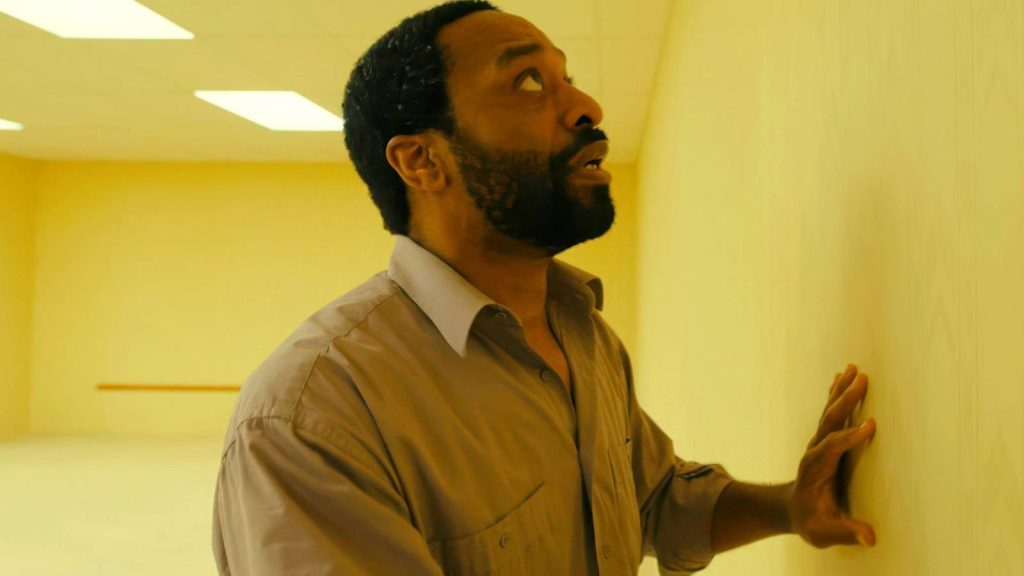
    Clark’s tragedy is that he became trapped in identity itself.

    Clark’s Loop

    Throughout the film, Clark appears consumed by loss. He is no longer the architect he dreamed of becoming. His marriage has failed. He runs a struggling pirate-themed furniture store that seems to embody everything he never wanted his life to become.

    Clark’s attempt to escape identity completely leads him deeper into identification with Pirate Clark.

    His response to these losses is not acceptance but avoidance.

    He drinks heavily. He obsesses over the Backrooms. During the roleplay exercises with Mary, he seems unable to fully confront his own responsibility for what happened. He repeatedly retells and reframes the story of his life. The more painful the reality becomes, the more he retreats into explanations, rationalisations, and self-protective narratives.

    Clark revisits the memory of his failed marriage, attempting to reshape its meaning.

    The film’s key insight may be expressed through Mary’s observation:

    “We all have our loops. Our habits. Behaviors that keep us walking in circles.”

    Clark’s tragedy is not simply that bad things happened to him. His tragedy is that he becomes trapped in a loop that once protected him but now sustains his suffering.

    The Backrooms as Conditioned Identity

    A fascinating aspect of the film is the idea that the Backrooms are populated by “misremembered” versions of people, objects, and places.

    Furniture is distorted.

    Rooms are distorted.

    People are distorted.

    Memories are distorted.

    What if the Backrooms are not merely a place, but a representation of conditioned identity itself?

    The rooms are not merely memories.

    The corridors, loops, dead ends, and repeating pathways resemble the mental routes we travel through habit. The more often we walk them, the easier they become to follow. Eventually, they feel natural and inevitable.
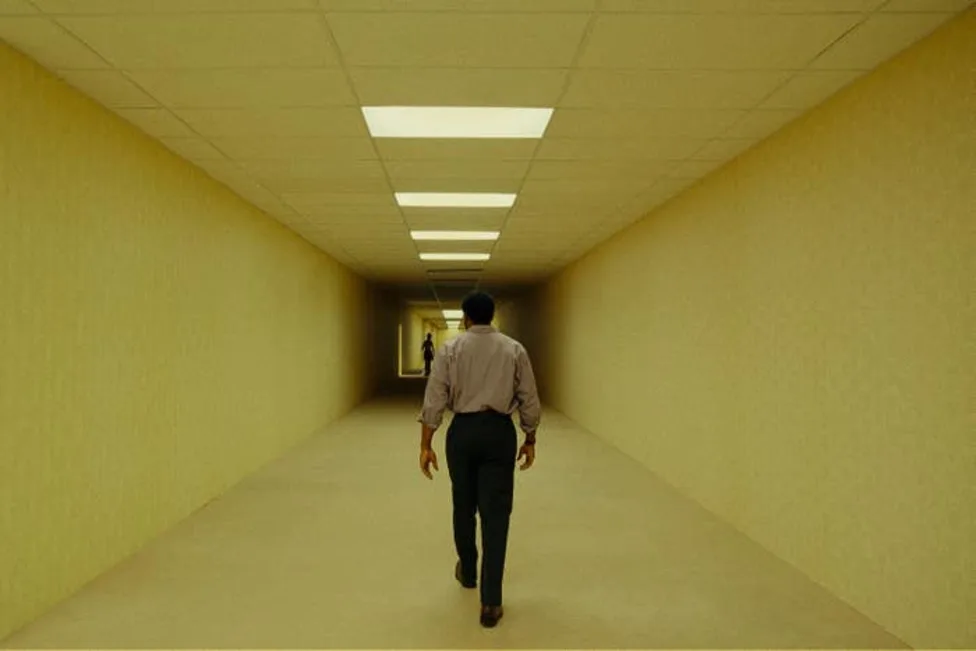
    The maze-like architecture can be read as a metaphor for conditioned mental pathways and recurring habits.

    Clark repeatedly follows the path of least resistance.

    Avoidance.

    Alcohol.

    Blame.

    Rumination.

    Resentment.

    The terrifying possibility suggested by the film is that these pathways do not lead out of suffering. They become the maze.

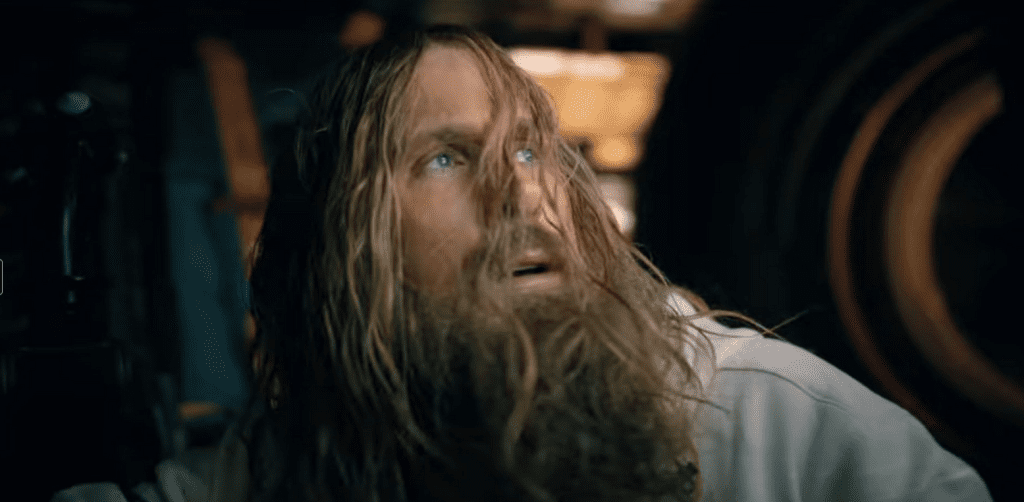
    Pirate Clark

    The film’s most disturbing image is not the shadowy creature lurking in the corners of the Backrooms.

    It is Pirate Clark.

    Initially, I thought Pirate Clark represented Clark’s “inner demon.” On reflection, I think something more interesting is happening.

    Pirate Clark is not Clark’s hidden self.

    Pirate Clark is Clark’s most developed self.
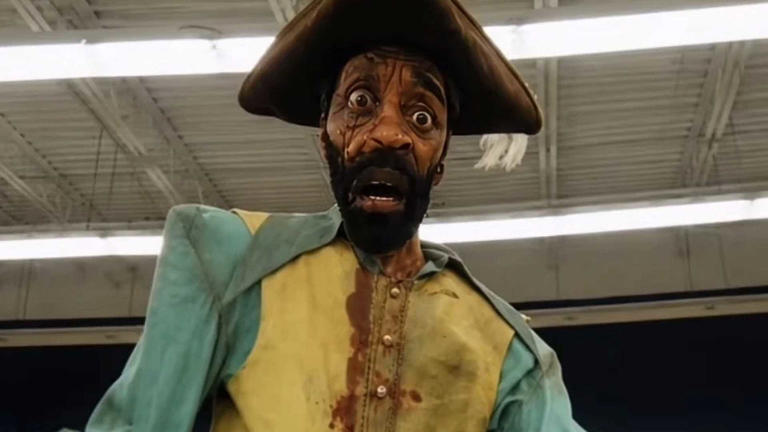
    Pirate Clark may represent not Clark’s hidden self, but the culmination of years of reinforced avoidance and self-identification.

    He is the accumulated result of years of reinforcement, avoidance, anger, shame, and self-identification. The pirate costume begins as an embarrassing performance for furniture advertisements. By the end of the film, the performance has become reality.

    Clark spends much of the film trying to escape the identity he hates. Ironically, his hatred, avoidance, and fixation only strengthen it.

    He becomes the monster he fears.

    Why Mary Survives

    The more I reflected on the film, the more I began to think that Mary, not Clark, is the true protagonist.

    Like Clark, Mary experiences loss. Her childhood home is demolished. Her relationship with her mother is marked by absence and suffering. Her present life appears lonely and uncertain.

    If Clark represents disequilibrium and identification with conditioned patterns, what specifically does Mary’s experience entering the backrooms show?

    Yet her response is different.

    She preserves a concrete handprint from her childhood, but eventually uses it to escape the Backrooms, destroying it in the process. She remembers the past, but she does not appear consumed by it.

    Mary preserves a fragment of her past, yet ultimately destroys it in order to escape.

    Unlike Clark, she does not spend the film trying to force certainty onto reality.

    She experiences fear.

    She experiences confusion.

    She experiences loss.

    But she increasingly appears able to remain with those experiences without reacting to them immediately.

    The ending is particularly striking. Mary does not receive answers. The mysteries of the Backrooms remain unresolved. The final images reveal that even Mary’s memories and identity have become incorporated into the strange logic of the Backrooms.

    Yet she does not appear trapped in the same way Clark was.

    The Horror of Impermanence

    The film ultimately left me thinking about impermanence.

    Clark cannot accept change. He cannot accept the loss of his marriage, his career dreams, or his self-image. He wants freedom from suffering so badly that he seeks freedom from experience itself.

    He envies the furniture because it does not think, feel, regret, or suffer. As he says, “For starters, they can’t feel anything. Can you imagine how good that must feel? I mean, there’s no thoughts, no pain, no ego. No fear. They simply… exist. Like furniture.”

    Mary’s journey points in a different direction.

    Not certainty.

    Not victory.

    Not closure.

    Acceptance.

    If Clark’s central craving is certainty about himself (“I need to know who I am”), could Mary’s ending represent a willingness to remain in not-knowing?

    The film’s final lesson may be that suffering does not come from uncertainty itself. Suffering comes from our desperate attempts to escape uncertainty, fix our identities, and hold onto things that cannot remain unchanged.

    Clark becomes trapped by the story he tells about himself.

    Mary survives because she remains willing to live without a final comforting story. Mary’s final emotion is not terror (“it’s still coming!”), relief (“I escaped!”), or triumph (“I defeated it!”). It is the absence of these conventional horror endings that is interesting. Mary seems to accept the uncertainty of not knowing.

    And that may be the most unsettling idea in the entire film.

    Unlike Pirate Clark, the Backrooms’ version of Mary remains unresolved, preserving uncertainty rather than becoming a fixed identity.
  • Project Hail Mary, Ideology, and the Failure of the Hero

    Project Hail Mary, Ideology, and the Failure of the Hero

    ‎Project Hail Mary - Apple TV

    What if the most ideological moment in Project Hail Mary is not when the main character, Rylnad Grace, saves the world, but when he insists, repeatedly, that he is not a hero?

    We are tempted, of course, to read this in the most obvious way, that a man who begins as a coward becomes, through narrative necessity, a hero. This is a standard character arc, the ideological comfort of many stories. But this reading misses something more interesting. What if Grace’s problem is not that he fails to be a hero initially, but that he is too invested in the very category of the hero itself?

    The Ideological Trap of “I’m not heroic in any way”.

    Consider Grace’s insistence that “I’m not heroic in any way. I get sick on an elevator!”

    Grace refuses the request to join the space mission – ideology + identity.

    This is not modesty. Nor is it simple fear. It is something more precise, an identification through negation. He tells us who he is by telling us who he is not. And in doing so, he reveals the structure of ideology at work. Drawing upon Michel Foucault, we can say that the “hero” is not a natural category but a discursive position, it is a role produced by institutions, narratives, and expectations. Grace does not stand outside the discourse; he is fully caught within it. His refusal is not a rejection of the system, but a form of participation in it. He accepts the terms hero vs non-hero and places himself on the “correct” side. In other words, he believes in the category enough to refuse it.

    The Body as the Site of Ideology.

    Here is where psychologist Burno Cayoun’s MiCBT framework becomes unexpectedly useful, not as a competing explanation, but as a way of further pushing this issue of identification. Of course, one should note that Cayoun’s MiCBT is a therapeutic framework designed for clinical application. Its use here is not to “diagnose” a fictional character, but as a way of reading how the film represents the relationship between thought, sensation, and action.

    Grace under stress. A somatic experience.

    Cayoun’s model suggests that what we call “identity” is not just an abstract concept, but embodied in how we feel. Evaluations like “I’m not heroic” are not neutral statements because they trigger body sensations such as elevated heart rate, constriction, and heat, which in turn produce a reaction, such as avoidance.

    So when Grace says “I’m not heroic in any way,” this is not simply an ideological statement. It is a somatic event, a moment where a clear physical sensation occurs rather than just an abstract thought. He is not just anxious; his face flushes, his chest tightens, his stomach drops and so on.

    According to Cayoun, this evaluation activates the “I/me” network; it produces an unpleasant bodily state, and the reaction (refusal) then aims to reduce that discomfort.

    We might say, then, that ideology is not just something we think. It is something we feel in the body. Grace does not refuse the mission simply because it is dangerous. He refuses it because the situation produces a bodily state he cannot tolerate, and this state is inseparable from the identity he has constructed.

    Amnesia: The Fantasy of Escape from Ideology.

    The film begins with the central conceit that Grace has amnesia. This appears, at first glance, to offer a kind of liberation. Without memory, Grace is no longer burdened by the past, his failures, his self-doubt. He becomes capable, adaptive, even, dare we say, heroic. But we should be careful here. Amnesia is not simply a narrative convenience; it is a fantasy. It asks, what would remain of someone if we stripped away the accumulated layers of identity?

    Grace waking up on the ship. A disruption of identity.

    From a Foucauldian perspective, this is a temporary suspension of subjectification. The subject loses access to the discursive positions that previously structured their existence. From a MiCBT perspective, something equally important happens: the evaluation loops are disrupted. Without immediate access to identity-based schemas, the chain of evaluation> sensation > reaction is weakened.

    What emerges is not a new self, but a different relation to experience of less immediate judgment, less reactive avoidance, and more direct engagement with the situation.

    The Return of Memory: The Real Test.

    The true test comes when memory returns.

    Grace and Rocky celebrating. Engagement and cooperation.

    If identity were simply a matter of content, this would mark the return of the old Grace, the man who insists, “I’m not heroic in any way.” But this is not what happens.

    Instead, something more subtle occurs. Grace no longer needs to declare who he is. In the final act escalation [SPOILER], when faced with the decision to return to Earth or to sacrifice that return to save Rocky, the alien, who unexpectedly becomes both collaborator and companion to Grace, he does not announce “I am a hero now” or retreat to his earlier avoidance and refusal. He simply acts. And here we encounter a paradox: the only way to become a hero is to stop needing to define yourself against or within the category of the hero altogether.

    Beyond Identity.

    This is where Cayoun’s notion of “equilibrium” crosses over with cultural studies theory in a useful way. In MiCBT, equilibrium is achieved when attention is no longer dominated by evaluation and reaction, but balanced with sensory and bodily awareness. This does not eliminate thoughts; it changes the relationship to them.

    Deciding a future without identity narration.

    In Foucauldian terms, we might say that the subject is no longer fully governed by the ned to position itself within available discourse.

    Grace’s transformation, then, is not from coward to hero but from someone who must constantly declare and defend their identity TO someone who can act without first wrestling with and then deciding who they are.

    Conclusion: The Failure of the Hero.

    The ultimate irony of Project Hail Mary is that it appears to affirm the heroic narrative while quietly undermining it.

    The film gives us the spectacle of sacrifice, bravery, and salvation. But beneath this, it suggests something more unsettling, that the possibility of identity itself, this constant need to say “I am this” or “I am not that “, is the very mechanism that traps us in a reactive pattern of thought and behaviour.

    Grace does not save the world because he discovers he was a hero all along.

    He does so because, at a crucial moment, he no longer needs to know whether he is one.

    References

    Cayoun, B. A. (2015). Maintaining well-being and personal growth, in mindfulness-integrated CBT for well-being and personal growth: four steps to enhance inner calm, self-confidence and relationships. UK: John Wiley & Sons, Ltd, Chichester,

    Foucault, M. (1990). The history of sexuality: An introduction. Vintage.

  • Editing Stories, Framing Films

    Editing Stories, Framing Films

    Episode #127
    First Aired Date: 13 Nov 2025

    We interview Zackary Roeth, volunteer at Print Radio and student filmmaker, to explore his work editing audiobooks for local radio and his creative work in student film.
    Our movie review is the 90th anniversary of Bride of Frankenstein (1935), we unpack the film’s enduring legacy, stylistic nuances, and cultural impact. Drawing on insights from film historian Scott MacQueen’s audio commentary on the Blu-ray release, we delve into what makes this classic continue to resonate nearly a century later.

    Listen and watch here:

    Links:

  • Throne of Blood

    Throne of Blood

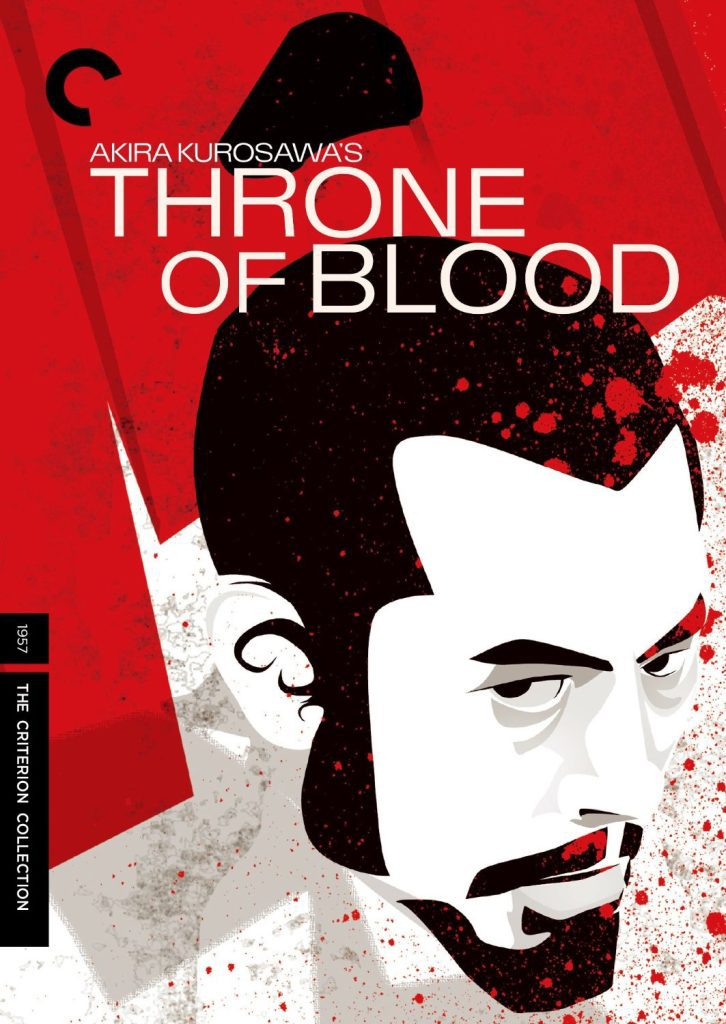
    We discuss what is considered one of the best adaptations of Shakespeare’s Macbeth: Kurosawa’s Throne of Blood. We draw on Michael Jeck’s commentary from the Criterion Blu-ray to explore the blending of Shakespearean tragedy, Japanese aesthetics (such as Noh theatre), and Kurosawa’s unique cinematic storytelling style.

    We also dive into some of the TV tropes to highlight the film’s profound themes of power, guilt, ambition, and fate, along with Kurosawa’s masterful use of atmosphere and symbolism: Ambition Is Evil, Bloody Hallucinations of Guilt, Murder Makes You Crazy, the Sliding Scale of Free Will vs. Fate, and Villain Protagonist.