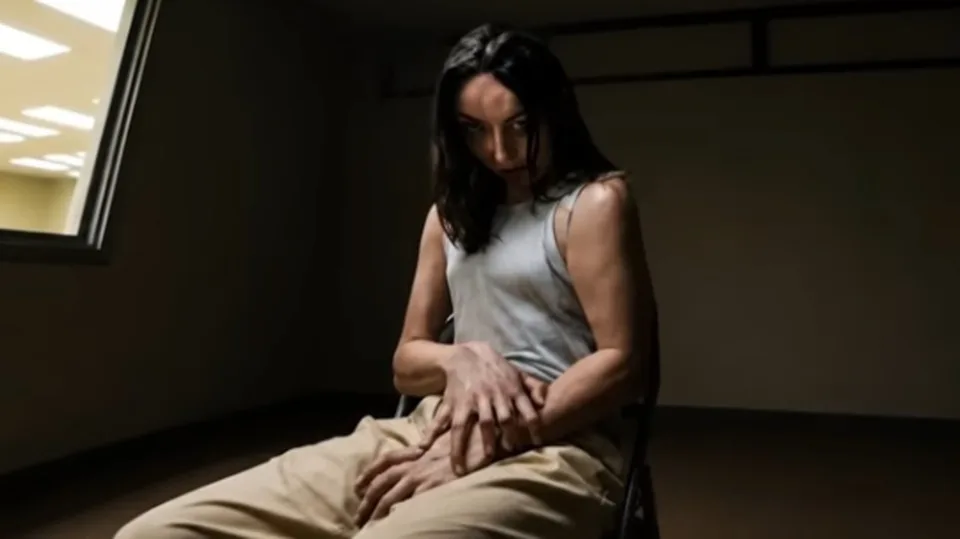
At first glance, Backrooms (2026) looks like a horror film about an impossible maze populated by distorted creatures and misremembered spaces. Drawing on concepts from mindfulness-based psychology and cognitive behavioural theory, Backrooms can be read as a film about conditioning, identity, avoidance, and suffering.
The deepest source of horror in Backrooms isn’t the liminal maze.
It’s the possibility of becoming trapped inside your own conditioned patterns of thinking, feeling, and reacting.
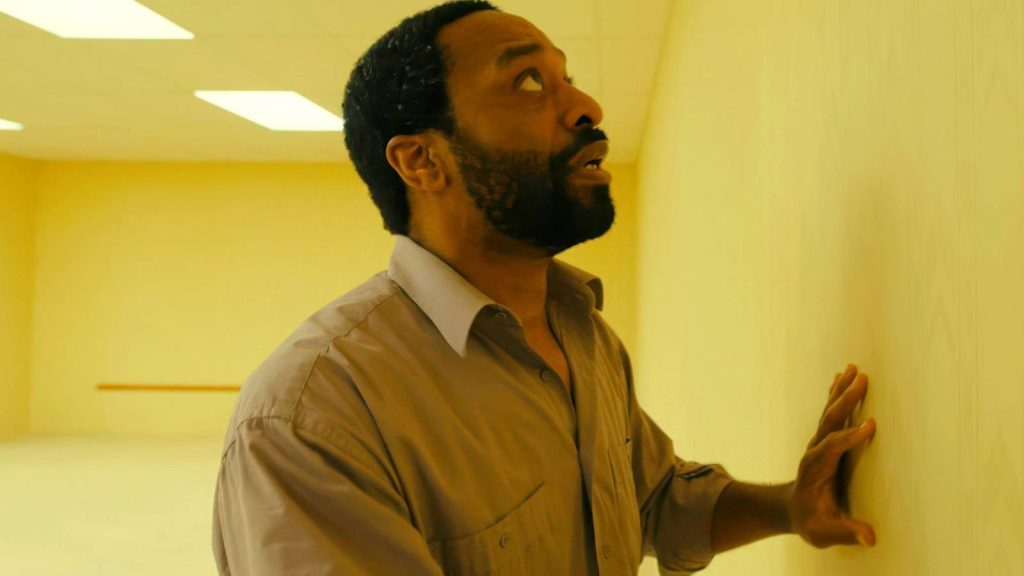
Clark’s Loop
Throughout the film, Clark appears consumed by loss. He is no longer the architect he dreamed of becoming. His marriage has failed. He runs a struggling pirate-themed furniture store that seems to embody everything he never wanted his life to become.

His response to these losses is not acceptance but avoidance.
He drinks heavily. He obsesses over the Backrooms. During the roleplay exercises with Mary, he seems unable to fully confront his own responsibility for what happened. He repeatedly retells and reframes the story of his life. The more painful the reality becomes, the more he retreats into explanations, rationalisations, and self-protective narratives.
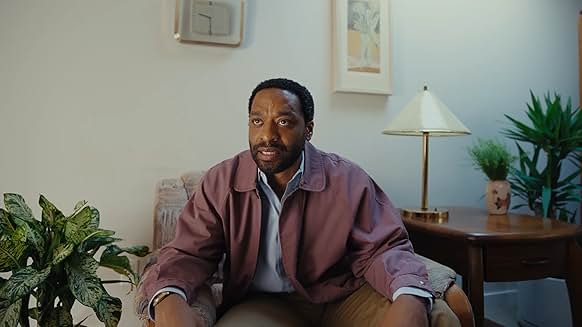
The film’s key insight may be expressed through Mary’s observation:
“We all have our loops. Our habits. Behaviors that keep us walking in circles.”
Clark’s tragedy is not simply that bad things happened to him. His tragedy is that he becomes trapped in a loop that once protected him but now sustains his suffering.
The Backrooms as Conditioned Identity
A fascinating aspect of the film is the idea that the Backrooms are populated by “misremembered” versions of people, objects, and places.
Furniture is distorted.
Rooms are distorted.
People are distorted.
Memories are distorted.
What if the Backrooms are not merely a place, but a representation of conditioned identity itself?
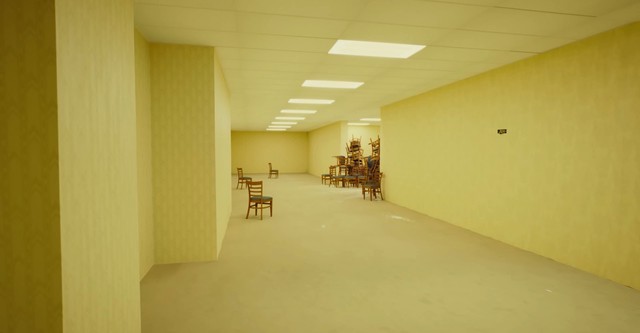
The corridors, loops, dead ends, and repeating pathways resemble the mental routes we travel through habit. The more often we walk them, the easier they become to follow. Eventually, they feel natural and inevitable.
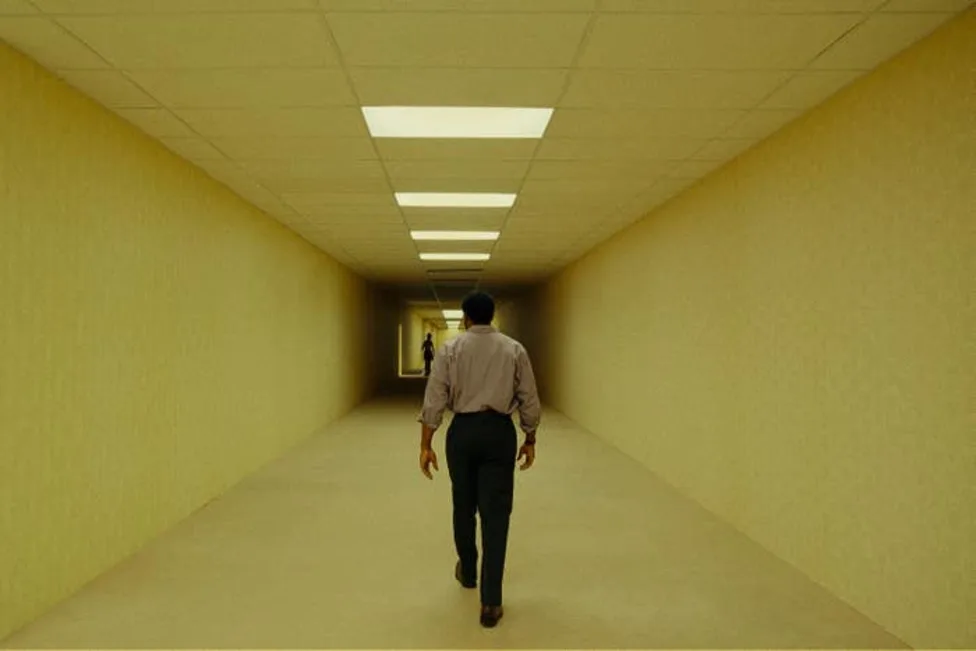
Clark repeatedly follows the path of least resistance.
Avoidance.
Alcohol.
Blame.
Rumination.
Resentment.
The terrifying possibility suggested by the film is that these pathways do not lead out of suffering. They become the maze.
Pirate Clark
The film’s most disturbing image is not the shadowy creature lurking in the corners of the Backrooms.
It is Pirate Clark.
Initially, I thought Pirate Clark represented Clark’s “inner demon.” On reflection, I think something more interesting is happening.
Pirate Clark is not Clark’s hidden self.
Pirate Clark is Clark’s most developed self.
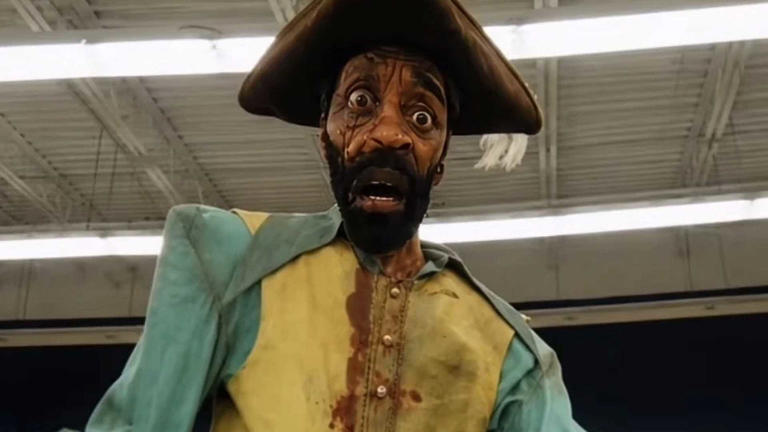
He is the accumulated result of years of reinforcement, avoidance, anger, shame, and self-identification. The pirate costume begins as an embarrassing performance for furniture advertisements. By the end of the film, the performance has become reality.
Clark spends much of the film trying to escape the identity he hates. Ironically, his hatred, avoidance, and fixation only strengthen it.
He becomes the monster he fears.
Why Mary Survives
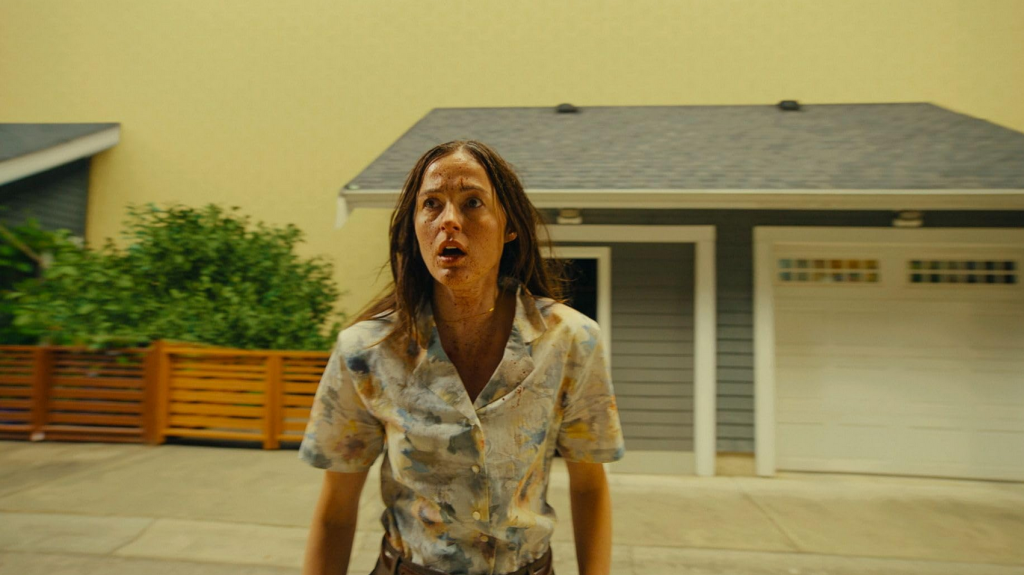
The more I reflected on the film, the more I began to think that Mary, not Clark, is the true protagonist.
Like Clark, Mary experiences loss. Her childhood home is demolished. Her relationship with her mother is marked by absence and suffering. Her present life appears lonely and uncertain.
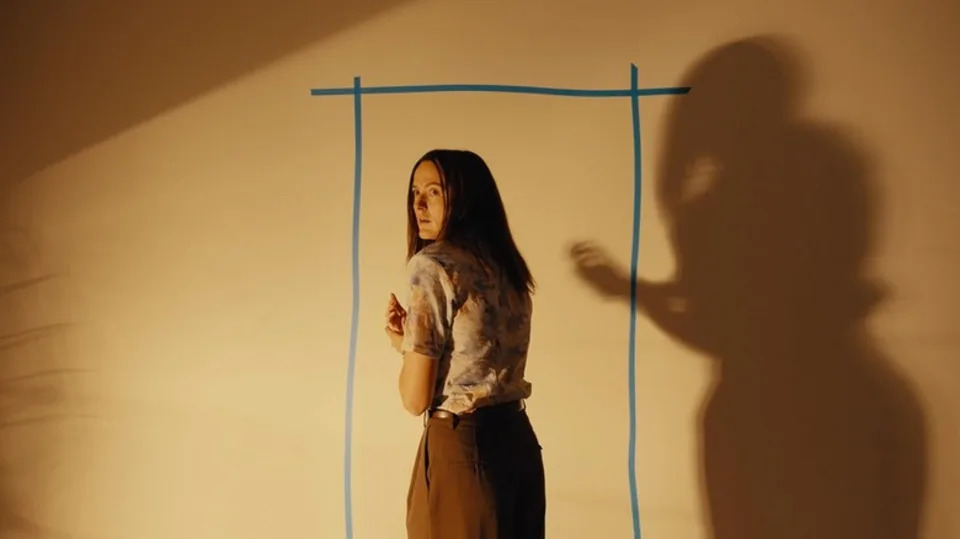
Yet her response is different.
She preserves a concrete handprint from her childhood, but eventually uses it to escape the Backrooms, destroying it in the process. She remembers the past, but she does not appear consumed by it.
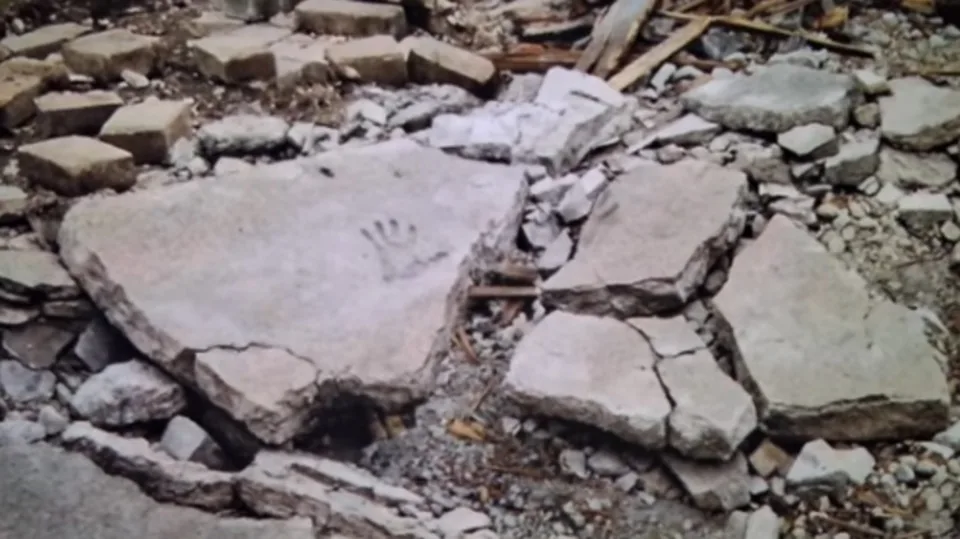
Unlike Clark, she does not spend the film trying to force certainty onto reality.
She experiences fear.
She experiences confusion.
She experiences loss.
But she increasingly appears able to remain with those experiences without reacting to them immediately.
The ending is particularly striking. Mary does not receive answers. The mysteries of the Backrooms remain unresolved. The final images reveal that even Mary’s memories and identity have become incorporated into the strange logic of the Backrooms.
Yet she does not appear trapped in the same way Clark was.
The Horror of Impermanence
The film ultimately left me thinking about impermanence.
Clark cannot accept change. He cannot accept the loss of his marriage, his career dreams, or his self-image. He wants freedom from suffering so badly that he seeks freedom from experience itself.
He envies the furniture because it does not think, feel, regret, or suffer. As he says, “For starters, they can’t feel anything. Can you imagine how good that must feel? I mean, there’s no thoughts, no pain, no ego. No fear. They simply… exist. Like furniture.”
Mary’s journey points in a different direction.
Not certainty.
Not victory.
Not closure.
Acceptance.
The film’s final lesson may be that suffering does not come from uncertainty itself. Suffering comes from our desperate attempts to escape uncertainty, fix our identities, and hold onto things that cannot remain unchanged.
Clark becomes trapped by the story he tells about himself.
Mary survives because she remains willing to live without a final comforting story. Mary’s final emotion is not terror (“it’s still coming!”), relief (“I escaped!”), or triumph (“I defeated it!”). It is the absence of these conventional horror endings that is interesting. Mary seems to accept the uncertainty of not knowing.
And that may be the most unsettling idea in the entire film.